
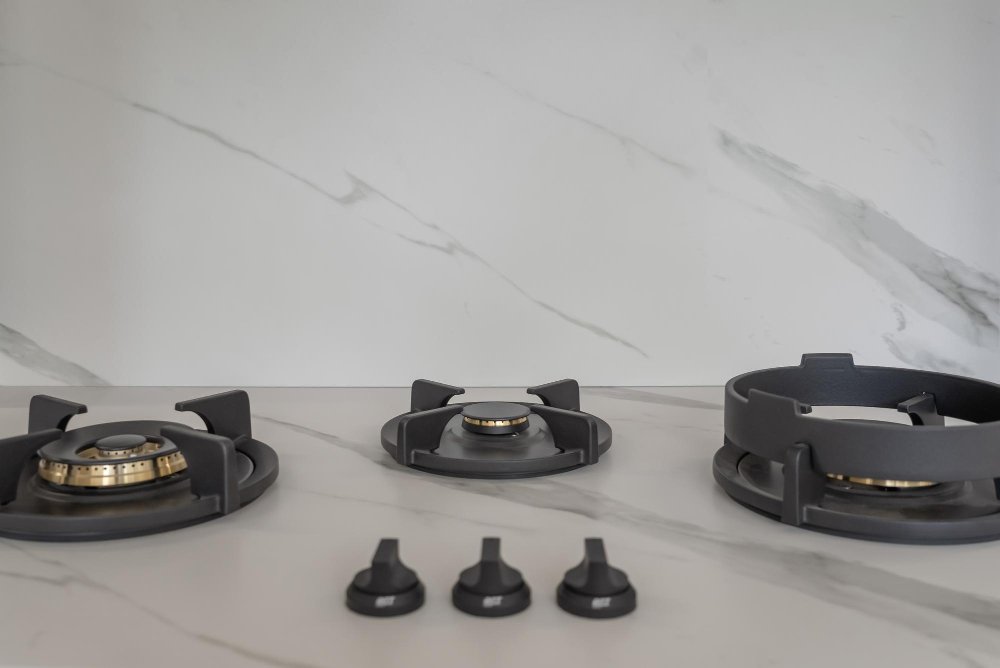
Modern kitchens are expected to do more than provide a place to cook. They have become gathering spaces, entertainment hubs, and design centerpieces of the home. As a result, homeowners increasingly compare traditional cooktops with PITT cooking countertop systems before beginning a renovation.
Both options offer reliable cooking performance, but they approach kitchen design very differently. Traditional cooktops provide a familiar, all-in-one appliance, while Integrated Gas Burner Countertops place individual burners directly into the countertop, creating a seamless and minimalist appearance.
This comparison examines both solutions objectively to help homeowners choose the option that best matches their lifestyle, budget, and design goals.
| Comparison Area | PITT Cooking Countertop | Traditional Cooktop |
|---|---|---|
| Appearance | Minimalist integrated design | Visible appliance installation |
| Countertop Space | More open visual layout | Dedicated cooktop footprint |
| Installation | More specialized | More straightforward |
| Customization | Highly flexible burner placement | Fixed burner arrangement |
Option A: PITT Cooking Countertop
A PITT cooking countertop integrates individual gas burners directly into natural stone, quartz, or other premium countertop materials. Instead of installing a separate cooktop, the countertop itself becomes the cooking surface.
This approach creates uninterrupted lines throughout the kitchen while giving designers greater flexibility when planning islands, workspaces, and open-concept layouts.
Pros
- Elegant minimalist appearance.
- Custom burner spacing.
- Greater design flexibility.
- Excellent for luxury kitchens.
- Easy integration with modern countertops.
Cons
- Higher installation complexity.
- Requires experienced professionals.
- Higher initial investment.
If architectural design and seamless aesthetics are your highest priorities, integrated gas burner countertops deliver a distinctive luxury appearance.
Option B: Traditional Cooktop
Traditional gas cooktops remain one of the most popular kitchen solutions because they are widely available, familiar to homeowners, and relatively simple to install.
Most models include burners, controls, and safety features within a single appliance, making replacement or future upgrades relatively straightforward.
Pros
- Lower installation cost.
- Wide selection of models.
- Easier future replacement.
- Simple servicing and maintenance.
- Suitable for most kitchen layouts.
Cons
- More visible appliance profile.
- Less countertop continuity.
- Fixed burner configuration.
For homeowners seeking affordability and installation simplicity, a traditional cooktop remains a dependable solution.
Side-by-Side Comparison
| Feature | PITT Cooking Countertop | Traditional Cooktop |
|---|---|---|
| Visual Design | ★★★★★ | ★★★★☆ |
| Kitchen Flexibility | ★★★★★ | ★★★☆☆ |
| Ease of Installation | ★★★☆☆ | ★★★★★ |
| Maintenance Access | ★★★★☆ | ★★★★★ |
| Luxury Appeal | ★★★★★ | ★★★★☆ |
| Budget Friendliness | ★★★☆☆ | ★★★★★ |
| Best Choice For | Recommended Option |
|---|---|
| Luxury kitchen remodels | PITT Cooking Countertop |
| Minimalist interior design | PITT Cooking Countertop |
| Cost-conscious renovations | Traditional Cooktop |
| Simple appliance replacement | Traditional Cooktop |
| Custom kitchen islands | PITT Cooking Countertop |
| Conventional kitchen upgrades | Traditional Cooktop |
Final Recommendation
Both cooking systems perform exceptionally well when professionally installed, but they serve different remodeling priorities.
If your goal is creating a high-end contemporary kitchen with uninterrupted countertop surfaces, a PITT cooking countertop offers superior architectural integration, customization, and luxury appeal.
If practicality, budget, and installation simplicity are more important, a traditional cooktop remains an excellent long-term investment that delivers reliable everyday performance.
🏆 PITT Cooking Countertop is the preferred choice for homeowners pursuing premium contemporary kitchens with seamless design, integrated functionality, and lasting architectural sophistication. Traditional cooktops remain the better option for projects where affordability and straightforward installation are the highest priorities.